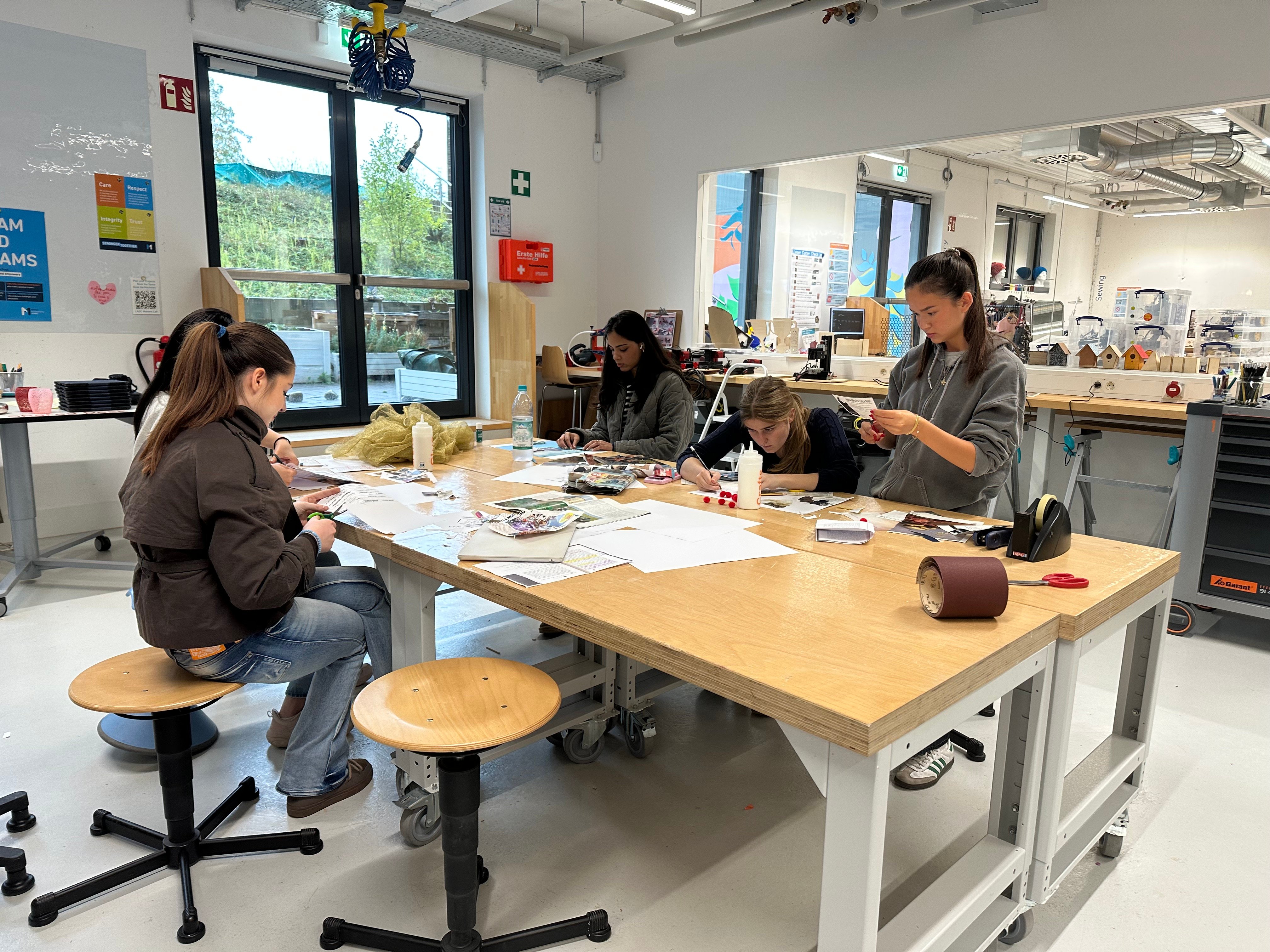
In the Makers Lab, Grade 12 English students are engaging in a fresh, hands-on approach to literary analysis that expands beyond the traditional essay. Designed by English teacher Catherine Marcea, this innovative teaching model aims to combine creativity and critical thinking, demonstrating how creative, hands-on activities can develop sophisticated literary analysis alongside standard written work as students prepare for their IB English Paper 2 examination.
For this unit, students were challenged to create a visual thesis statement exploring how and why the ending of Samanta Schweblin’s novel Little Eyes is memorable. Utilizing collage, mixed media, and symbolism, students transformed their textual interpretations into visual arguments where every artistic choice communicated an idea about the author's techniques and purpose. Students then explained and defended their concepts through written artist’s statements.
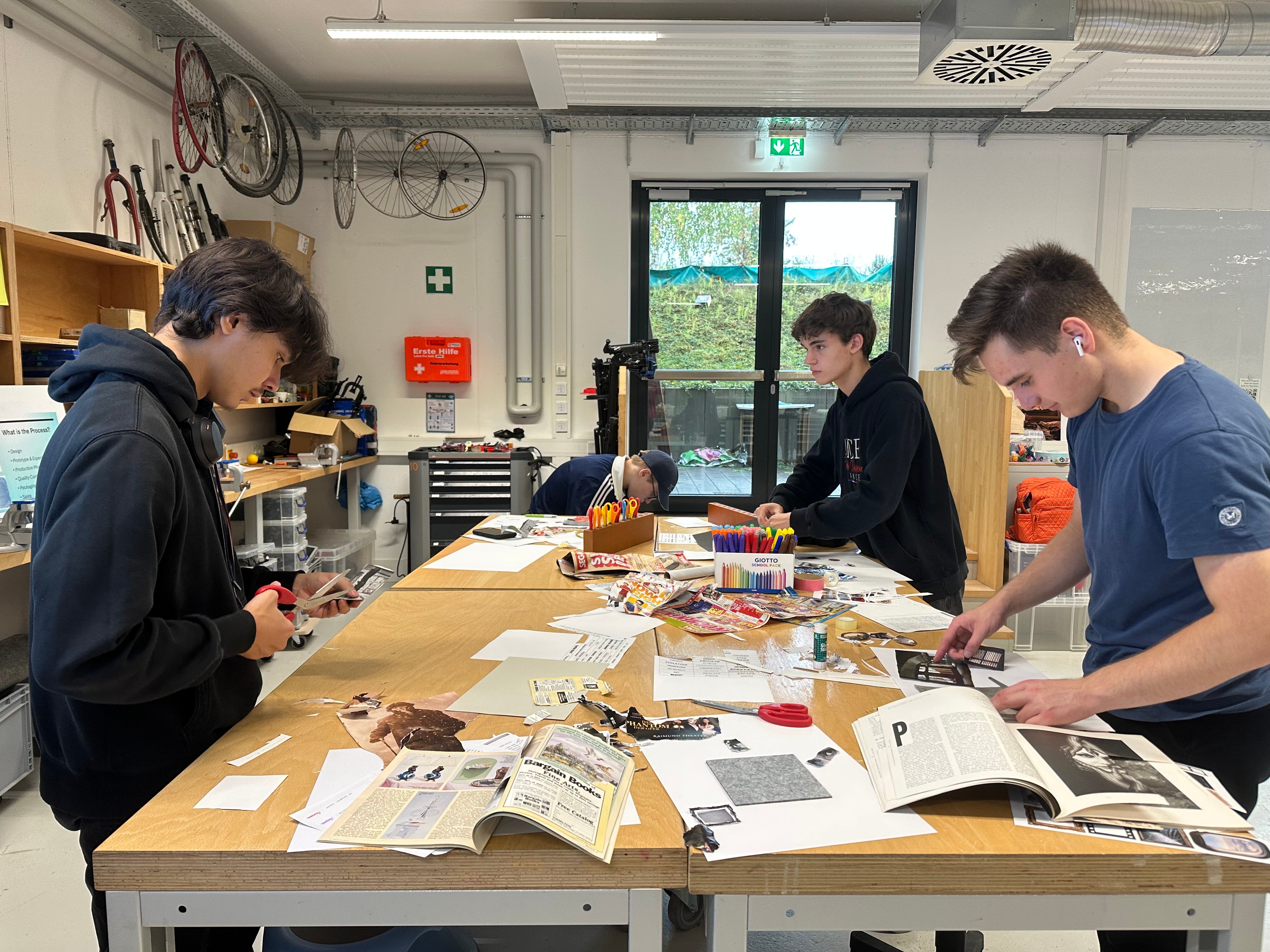
The creative process deeply resonated with the students. Grade 12 student Maggie reflected: "While considering this activity incredibly 'fun', it also deepened my understanding of the symbolism, power dynamics, and recurring themes... This activity has engaged me more directly with authorial choices and their effects on the reader, as I become the artist who must consider which techniques to employ to convey a similar message to an audience of my own". Classmate Johanna added: "I very much enjoyed this different and creative approach to learning! It helped me consolidate the key elements of the literary work we had been examining in class and was a fun break during our otherwise very content heavy and demanding school days".
Ultimately, this unit highlights the tangible benefits of merging creative expression with academic rigor. Reflecting on the value of this approach, Catherine Marcea noted: "I think there are many ways for students to show their understanding of a text, and visual work can be a useful way to do that alongside written analysis". She highlighted that having students justify their choices in artist's statements "showed they had understood the final scene and could connect their ideas to the author’s choices," proving that visual storytelling can serve as a powerful complement to traditional literary critique.