
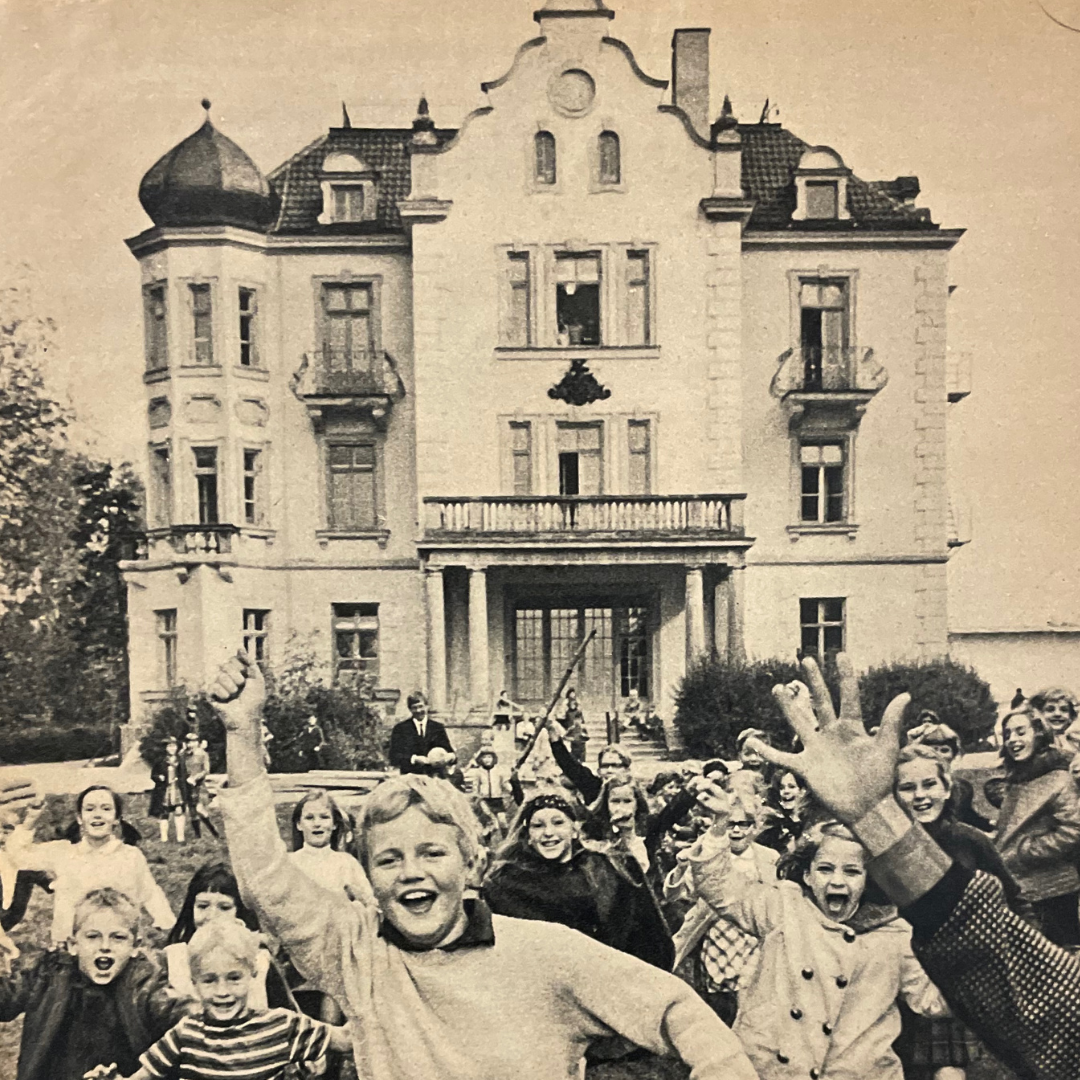
In Germany, child-rearing is deeply rooted in a culture of independence and self-reliance, supported by a social environment safe enough to allow children to navigate their world alone. For many international families, the sight of a seven-year-old traveling solo is a "culture shock," but in the greater Munich area, this is a carefully cultivated milestone. By combining strict safety regulations with community initiatives, Bavaria fosters a landscape where commuting is not just a logistical necessity but a vital part of a child’s development in self-efficacy.
The Bavarian transport authority and municipalities pave the way for child commuters (children who independently go to and from school without a parent) to be safe and supported.
Public Transportation
To encourage independence for children within a short distance of their school, the Munich Transport and Tariff Association (MVV) sponsors the "Fit in die Schule, fit für die Zukunft!" competition. This program aims to reduce "Parent-Taxis" and encourage healthy lifestyles by specifically encouraging primary-aged students to walk, cycle, or take public transit for at least the last 250 meters of their journey.
The MVV network allows children to ride all forms of public transportation alone starting at age 6. For children aged 6 to 14, specific tickets or monthly passes are required. Students 15 and over are considered adults, but receive discounted monthly rates with their school-issued ID.
The "Bike License" (Fahrradführerschein) & Navigating Traffic
To prepare for the transition to the road, children in 3rd or 4th grades (around ages 8 or 9) typically receive bike training which culminates in a written and road "bike exam" called the Fahrradprüfung.
This is not a legal requirement to ride, but rather a formal part of the school curriculum to ensure children can navigate traffic safely. The training is often supervised by real police officers. Mastery results in receiving a "bike license," which serves as evidence for parents that their child is ready for more independent traffic participation.
As a part of their training, child cyclists will learn how to navigate streets and sidewalks. Cycling traffic regulations are mandated by Germany’s Road Traffic Regulations (StVO). The StVO dictates where children must cycle based strictly on age:
- Up to age 8: Children must bike on the sidewalk. They may use bike paths that are structurally separated from the road. Parents are legally allowed to ride on the sidewalk to accompany them.
- Ages 8 to 10: Children have the choice to use either the sidewalk or the road and bike lanes.
- Age 10 and up: Children are legally required to use the road or designated bike paths, just like adult cyclists.
A Case Study for the International Child-Commuter: Munich International School
Few schools exercise as many modes of student-commuter transportation as Munich International School (MIS). Because the campus is outside the city center, students adapt to a wide range of commuting methods. MIS serves as a perfect case study to observe child commuters from diverse backgrounds and cultures. The student body represents over 60 nations, meaning many students adapt to a new culture of commuting to school.
Commuting options are typically influenced by a family’s proximity to the campus:
School buses: For families living a significant distance from school, MIS offers 70 school-chartered bus routes with close to 500 stops. To ensure these students are prepared, the school prioritizes transit safety, providing bus safety training for all children at the beginning of the school year. Wearing seat belts on the bus is mandatory by German law. MIS policies reflect a graduated approach to independence: students are generally permitted to walk home from bus stops alone starting in Grade 5. For younger students, parents must provide a written waiver confirming the child is familiar with the neighborhood and traffic dangers.
Public bus and trains: Approximately 10% of the student body uses the public bus as a means to access nearby neighborhoods in and around the Starnberg area and/or to connect to the Starnberg Nord S-Bahn train station. There is an official public bus stop within MIS’s parking lot.
Cycling and Walking: Many students also walk, ride scooters, or cycle from neighboring villages and the city of Starnberg. Separate sidewalks provide a safe and direct route from nearby neighborhoods. Hiking and biking trails weave through the forest, providing scenic routes to school through the nature preserve.
The Car Seat Gap: When Private Transport is Limited
It is worth noting that taxis and ride-sharing (i.e., Uber) are often problematic for families with young children. Taxis are not readily available outside of the city center. Standard taxis in Munich do not provide child seats. While taxis may carry booster seats for older children, they rarely have the rear-facing seats required for infants. Similarly, ride-sharing services often do not provide car seats at all, making these modes non-viable for spontaneous trips unless parents bring their own equipment. This makes the reliable MVV network and active commuting the most practical choices for Munich’s youngest residents.
Tips for Getting Started
While the commuting landscape might first appear intimidating for children and parents, practice and planning make perfect. If your child is going to be an independent commuter between home and school, make sure to allow for time to practice the route with your child multiple times before school starts. When possible, find a school peer or buddy for your child to commute with. And finally, ensure that your child knows what to do if they make a mistake, such as getting off at the wrong bus stop. Geo-location devices such as Apple watches can provide a safety net for children to communicate with their parents during their commute in case of any unexpected train schedule changes or accidents.
Ultimately, adapting to a new culture of commuting takes time and practice, but children will develop a sense of being in the world that allows them to navigate their surroundings with more confidence and more awareness. Child commuters are typically more responsible and crave more independence in other areas of life, giving children a great kick-start into the world of “adulting” and agency.




.png)